
Safety Committee Training That Prevents Gaps

Updated: 4 days ago
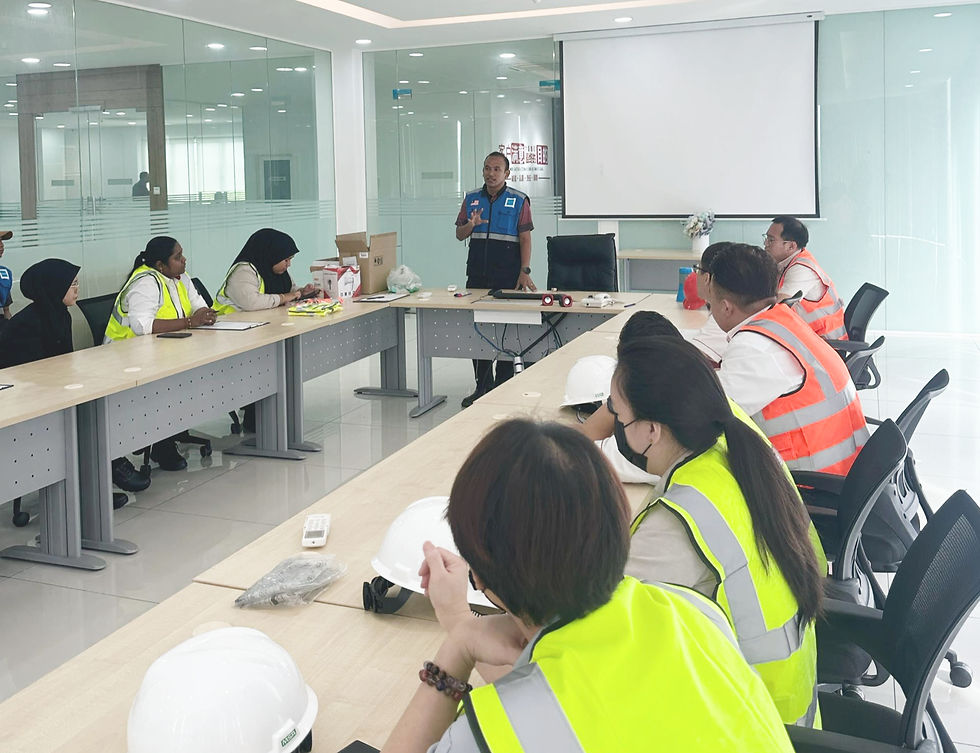
A safety committee can meet every month, record minutes, and still miss the warning signs that lead to an injury. The difference is not the meeting schedule. It is whether members have the confidence and practical skills to recognize hazards, ask the right questions, and follow an issue through to closure. Effective safety committee training gives representatives that capability.
For employers, this training is more than a compliance task. It creates a reliable connection between frontline experience and management action. Employees see risks that may not appear in an inspection report: a damaged guard used repeatedly, rushed loading practices, unclear chemical labels, or a work area that becomes unsafe only during peak production. A well-trained committee brings those observations into a structured process before they become incidents.

What Safety Committee Training Should Achieve
A committee is not a substitute for management accountability, competent supervision, or a formal safety and health management system. It is a working forum that helps these functions perform better. Members need to understand their role clearly: identify concerns, participate in inspections and investigations, recommend controls, communicate with workers, and monitor whether agreed actions have been completed.
Training should also set realistic boundaries. Committee members do not need to be experts in every technical discipline, and they should not be expected to approve work that requires specialist assessment. For example, chemical exposure, noise, lifting operations, confined spaces, and fire risk may require qualified personnel or technical monitoring. The committee’s role is to recognize when an issue needs escalation, preserve useful information, and make sure corrective action does not disappear after the meeting.
A practical program should help members answer four questions every time a concern is raised: What can cause harm? Who could be affected? What controls are already in place? What must happen next, by whom, and by when?
When committee members can use this simple line of thinking consistently, safety discussions become more specific. “The warehouse is unsafe” becomes “Pedestrians cross the forklift route near the dispatch door during shift change, visibility is restricted, and physical separation should be reviewed.” That is an issue management can investigate and resolve.
Core Topics in Safety Committee Training
Roles, responsibilities, and effective participation
Members should know how the committee fits within the organization’s wider safety responsibilities. This includes the role of management representatives, supervisors, employees, safety professionals, contractors, and emergency response personnel. Clear roles prevent two common failures: the committee taking on work it cannot authorize, or management treating the committee as the only group responsible for safety.
Training should cover how to prepare for meetings, collect input from work groups, raise concerns without blame, and communicate outcomes back to employees. A committee that only speaks among itself will quickly lose credibility. Workers are more likely to report hazards when they can see that concerns are heard, acted upon, and followed up.
Hazard identification and risk assessment
Committee members need a practical understanding of hazard identification and risk assessment. They should be able to spot physical, chemical, ergonomic, biological, and psychosocial hazards, as well as risks created by equipment, work methods, environmental conditions, and human factors.
The focus should be on work as it is actually performed, not only on written procedures. A procedure may state that workers use a lifting aid, while the actual job is completed manually because the aid is unavailable, too slow, or difficult to position. Training that includes site examples, walk-through inspections, photographs, and case scenarios helps members recognize this gap.
Members should also understand the hierarchy of controls. Personal protective equipment has a place, but it is usually not the first or strongest answer. Removing the hazard, substituting a safer process, installing engineering controls, or changing the work method may provide more dependable protection. The best option depends on the task, the exposure, and what is reasonably achievable without creating a new risk elsewhere.
Inspections, incident review, and corrective actions
A committee inspection should not be a casual walk around the workplace. Members need to know how to observe tasks, speak with employees, review conditions, document findings, and distinguish between an immediate danger and an improvement opportunity.
Incident and near-miss reviews require the same discipline. The goal is not to identify someone to blame. It is to understand the conditions that allowed the event to occur. Was the employee trained and supervised? Was the equipment maintained? Was the job rushed? Were procedures unclear or impractical? Were previous warning signs ignored?
Corrective actions need owners and deadlines. “Remind staff to be careful” is rarely a sufficient action because it does not change the conditions that created the risk. A stronger action might be to repair an access platform, revise a loading sequence, separate pedestrian and vehicle routes, or retrain authorized operators after a task change. The committee should track progress until the control is verified in the field.
Communication and meeting discipline
Good safety meetings are short enough to sustain attention and structured enough to produce decisions. Training should show members how to use an agenda, review outstanding actions, consider new reports, prioritize risks, and record decisions in plain language.
Minutes should capture more than attendance. They should identify the issue, location, risk level where relevant, corrective action, responsible person, target date, and status. This record helps management allocate resources and demonstrates that concerns are being managed systematically.
Committee members also need communication skills for difficult situations. Some employees may worry about being seen as complainers. Others may assume nothing will change because past reports were ignored. Listening carefully, avoiding personal criticism, and reporting back on outcomes are essential to rebuilding trust.
Why Generic Training Often Falls Short
Off-the-shelf training can explain committee duties, but it may not prepare members for the risks at a specific site. A construction operation faces different concerns than a food-processing plant, logistics center, engineering workshop, or facilities management team. The right training reflects the organization’s machinery, work environment, workforce, contractor activities, and previous incident trends.
There is also a balance between breadth and depth. New committee members need a broad foundation, while experienced members may benefit more from focused modules on incident investigation, ergonomics, chemical safety, working at height, forklift interactions, or emergency preparedness. Repeating the same introductory content each year may satisfy a training record requirement, but it does little to improve decision-making.
Practical sessions are especially valuable. Members should practice conducting a short inspection, identifying hazards from a task scenario, prioritizing corrective actions, and leading a discussion based on a near miss. This reveals whether participants can apply the concepts, not simply recall them.
Measuring Whether the Committee Is Working
The number of meetings held is not a meaningful measure by itself. A stronger review looks at whether hazards are reported early, actions are closed on time, repeat findings are reduced, and employees receive feedback after raising concerns.
Leading indicators are useful because they show whether the system is active before an injury occurs. These may include inspection completion, hazard reports, overdue corrective actions, participation in safety conversations, and recurring categories of findings. Lagging indicators, such as injuries or property damage, still matter, but they tell employers what has already gone wrong.
Management support is essential here. Committee members cannot solve hazards that require budget, engineering changes, staffing adjustments, or policy decisions. When leaders review findings, remove barriers, and recognize useful input, the committee becomes a practical source of operational intelligence rather than a paperwork exercise.
Building Training Into a Stronger Safety System
Safety committee training works best when it connects to the organization’s existing risk controls. Findings from workplace inspections should inform risk assessments. Incident trends should shape future training. Technical assessments, such as noise monitoring, ergonomic reviews, chemical exposure evaluation, or fire risk assessment, should be translated into clear actions the committee can help communicate and monitor.
Nuun Consultant supports organizations with practical, site-relevant training that helps safety representatives participate with greater confidence and purpose. The right program can be tailored to the hazards, workforce roles, and operational priorities of each workplace.
A capable committee will not eliminate every risk, but it can make sure small warning signs are seen, discussed, and addressed while there is still time to protect people.
Feel free to contact Nuun Consultant Sdn Bhd at 019 230 4900 or email us at admin@nuunconsultant.com to learn more!


Comments